
ESG — Environmental, Social, and Governance — is a term that can feel intimidating for small business owners. But it doesn’t have to be. This guide breaks down what ESG actually means for Singapore SMEs, why it’s becoming commercially important, and how to take your first practical steps without a big budget or a dedicated sustainability team.
What ESG Actually Means in Plain English

- Environmental (E): How your business uses energy and resources, how you manage waste, and what your environmental footprint looks like. This includes things like electricity consumption, packaging materials, and whether your suppliers have environmentally responsible practices.
- Social (S): How you treat your people and your community. This includes fair employment practices, staff wellbeing, training and development, and inclusivity. For Singapore SMEs, this is often where meaningful quick progress can be made.
- Governance (G): How your business is run — ethically and transparently. This includes data protection (PDPA compliance), anti-corruption practices, clear business policies, and how you manage risk.
Why Singapore SMEs Need to Pay Attention to ESG Now
ESG is no longer something only large listed companies need to worry about:
- Your enterprise clients are starting to ask: Large companies and MNCs in Singapore are including ESG criteria in their supplier assessments. If you supply to enterprise clients, this is already relevant.
- Your bank may be asking too: Green loans and ESG-linked financing are growing. Having documented sustainability practices strengthens your position.
- Government tenders are evolving: ESG readiness is increasingly relevant to government procurement and grant applications.
- Your best staff care about it: Younger workers, particularly, want to work for businesses that operate with integrity and purpose.
3 Simple ESG Actions Any Singapore SME Can Take This Month
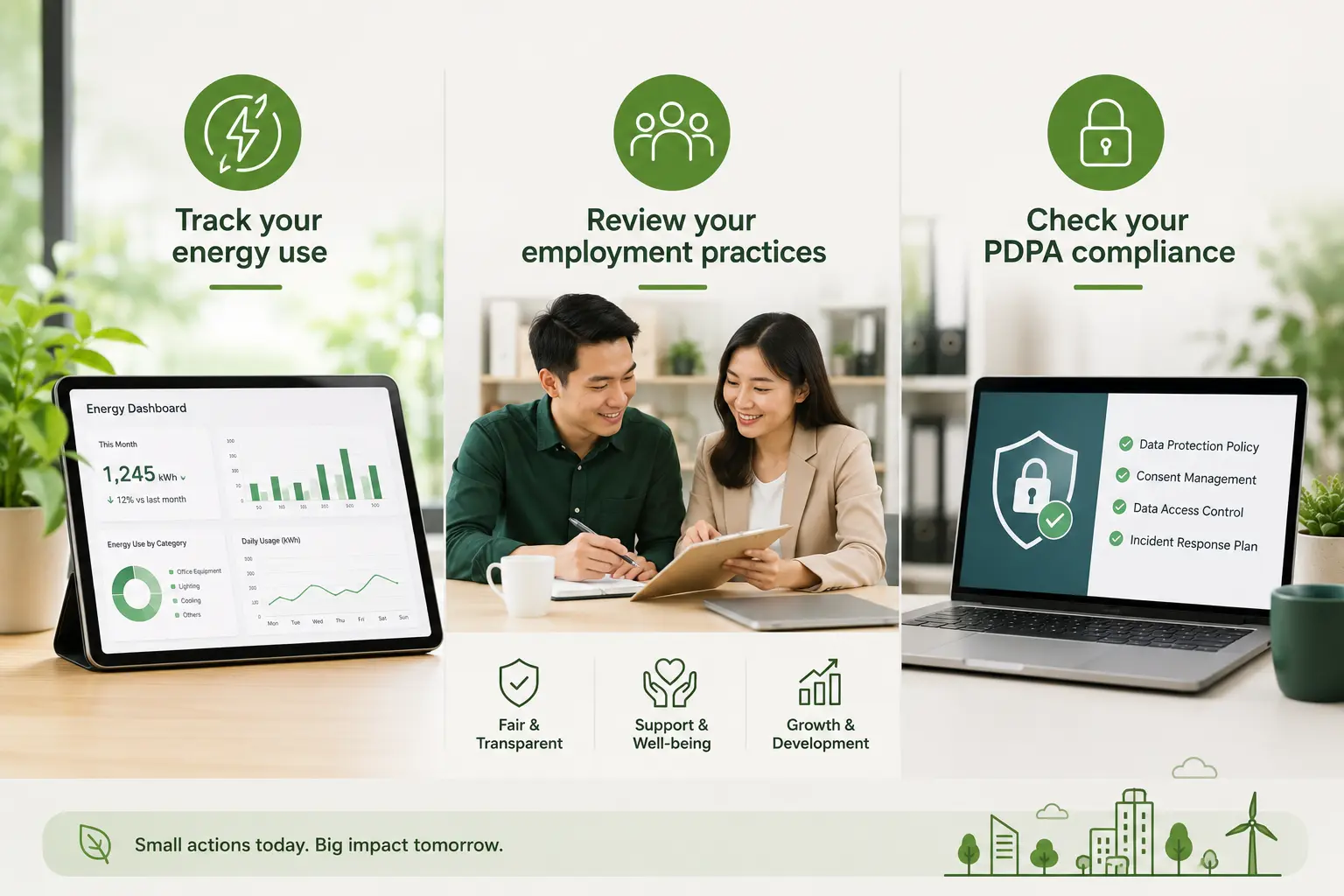
- Track your energy use: Start logging your monthly electricity and fuel consumption. This is the foundation of any environmental assessment and costs nothing.
- Review your employment practices: Do you have a written fair employment policy? Are your HR practices documented? This falls under the ‘S’ in ESG and is something most SMEs can address quickly.
- Check your PDPA compliance: Data governance is the ‘G’ in ESG. Make sure you have a documented data protection policy and that staff know how to handle customer data responsibly.
The Bigger Picture
These first steps won’t make your business a sustainability leader overnight. But they create a foundation you can build on — and they demonstrate to clients, banks, and partners that your business is taking this seriously.
Singapore’s Green Plan 2030 sets a clear national direction. The businesses that start building their ESG practices now will be better positioned to grow, win contracts, access financing, and attract talent in the years ahead.
Bluehive’s certified sustainability practitioners help Singapore SMEs build practical ESG roadmaps that are commercially grounded and credible. Start with a simple baseline conversation. Read more at www.bluehiveasia.com
Contact Bluehive Consulting Asia
www.bluehiveasia.com | info@bluehiveasia.com | +65 9191 9682