
Job redesign is one of the most underutilised productivity levers available to Singapore SMEs. Most business owners encounter the term in the context of government grant applications — particularly Workforce Singapore’s Career Transformation Programmes (CTC) — but the commercial value of job redesign extends far beyond grant eligibility. Done well, it is one of the most direct paths to improved productivity, reduced key-person dependency, and a more resilient workforce.
What Job Redesign Actually Means
Job redesign is the structured process of reviewing, restructuring, and improving how roles are defined and how work is distributed across an organisation. It typically involves:
Auditing what people actually do in their roles — not just what their job description says — and identifying where time is being spent on low-value, repetitive, or duplicated tasks. Restructuring responsibilities to better align with business goals, technology changes, and workforce capabilities. Documenting updated roles in clear SOPs and job descriptions. Building capability development plans to support the transition.
Why Singapore SMEs Need This Now

Several converging pressures make job redesign particularly relevant for Singapore SMEs in 2026:
- Rising manpower costs: With labour costs increasing, SMEs need to ensure every role generates proportional productivity — and that manual or repetitive tasks are systematised or automated
- Technology adoption: As SMEs implement new digital tools and AI systems, roles that were designed for manual processes no longer fit — creating confusion, resistance, and underutilisation
- Workforce ageing: Singapore’s workforce includes a significant proportion of mature workers whose roles need to be thoughtfully redesigned to leverage their experience while adapting to new ways of working
- Key-person dependency: Many SMEs have critical knowledge locked in individual team members — a significant operational risk that job redesign and SOP development directly addresses
The Role of SOPs in Job Redesign
Standard Operating Procedures (SOPs) are the practical backbone of effective job redesign. Without documented SOPs, job redesign remains theoretical — staff revert to old habits, new hires struggle to onboard, and the productivity gains fail to materialise.
Bluehive’s job redesign engagements always include SOP development as a core deliverable — because redesigning a role you haven’t documented is not possible.
How Singapore Government Grants Support Job Redesign
Several Singapore government programmes support SME job redesign efforts:
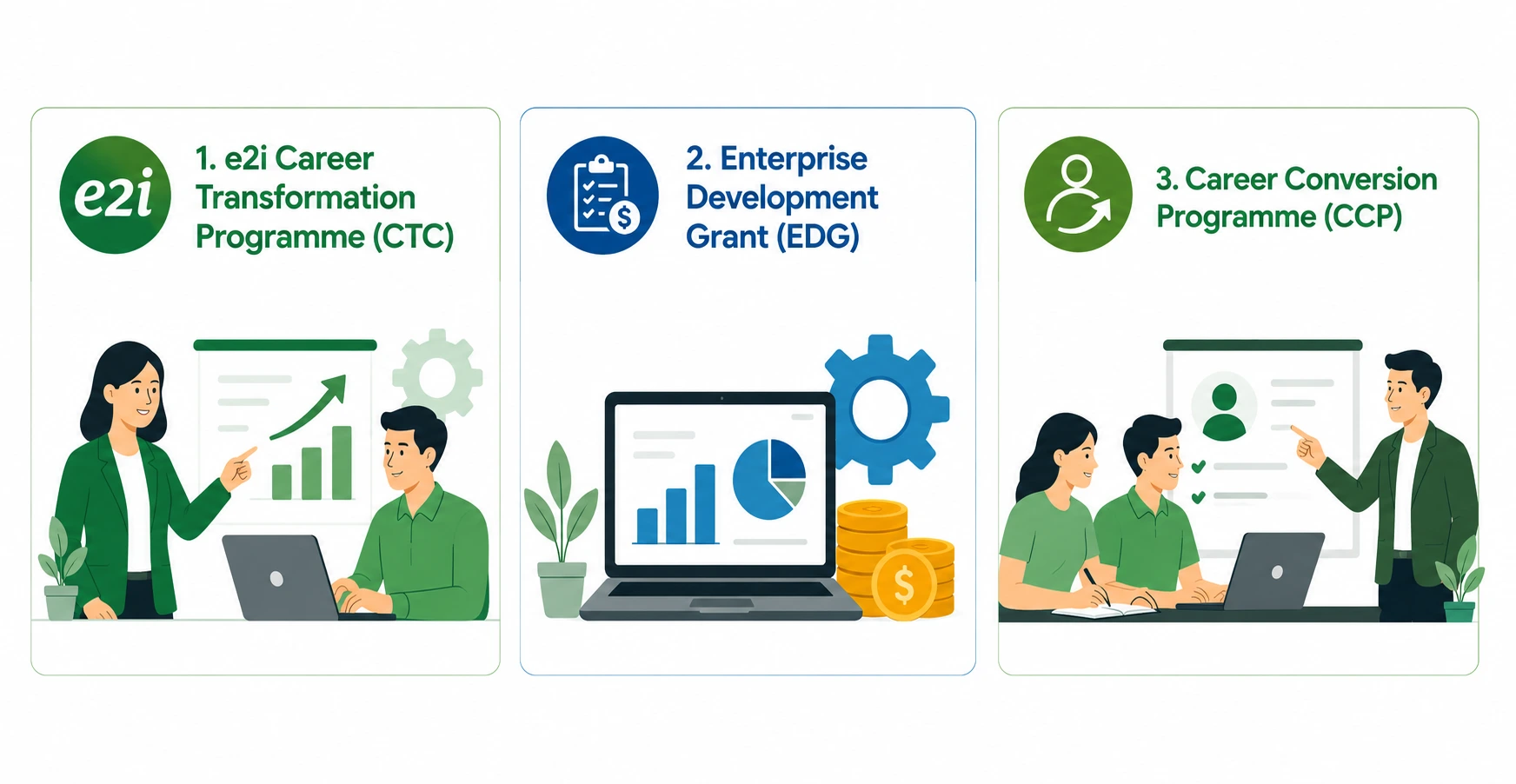
- e2i Career Transformation Programme (CTC): Supports workforce transformation projects including job redesign, SOP development, and training. Bluehive is a recognised CTC consultant.
- Enterprise Development Grant (EDG): Can fund business strategy, process improvement, and human capital development projects including job redesign.
- Career Conversion Programme (CCP): Supports reskilling of workers into new or redesigned roles.
What Successful Job Redesign Produces
- Clearer role accountability — staff know exactly what they are responsible for
- Reduced duplication — tasks that were being done multiple times or by multiple people are consolidated
- Faster onboarding — documented roles and SOPs mean new hires ramp up faster
- Better technology adoption — redesigned roles integrate new tools into daily workflow, not around it
- Improved retention — staff who understand their roles and see a development path are more likely to stay
- Stronger operational resilience — less dependency on any single individual
Bluehive is a recognised e2i CTC and Enterprise Singapore EDG consultant, helping Singapore SMEs design workforces that are productive, resilient, and future-ready. Read more at www.bluehiveasia.com
Contact Bluehive Consulting Asia
www.bluehiveasia.com | info@bluehiveasia.com | +65 9191 9682